
What Is Myofascial Release? A Denver Myofascial Therapist Explains

Updated: Oct 13
What is myofascial release? A John F. Barnes–trained therapist in Denver explains fascia, what happens in a session, and what becomes possible when it lets go.
Last updated: October 2026
Notice your jaw right now. Your shoulders. The breath you may be holding halfway down. Most of us carry a brace we stopped noticing years ago, and a lot of it lives in a tissue most people have never heard of.
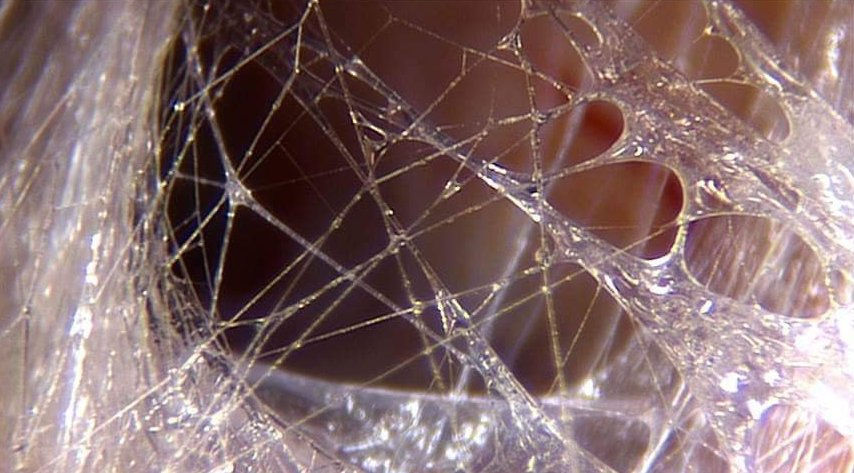
Myofascial release (MFR) is a hands-on therapy that uses slow, sustained pressure, held for three to five minutes or longer, to release restrictions in fascia. Fascia is the web of connective tissue that wraps and links every muscle, bone, nerve, and organ in your body. When it softens, the whole structure has room to move again.
I'm Jules Combest, a Licensed Massage Therapist in Denver who has trained in the John F. Barnes approach since 2021. Here is what fascia is, why it tightens, what actually happens on my table, and what people walk out with.
What is fascia?
Fascia is a continuous, three-dimensional web of connective tissue that runs from the top of your skull to the soles of your feet without a break. It surrounds and weaves through every muscle, bone, organ, and nerve, so every part of your body is connected to every other part.
In a living body, healthy fascia is hydrated and gel-like. It glides, it stretches, and it carries information. French hand surgeon Dr. Jean-Claude Guimberteau filmed living fascia under the skin and showed it as a moving, fluid, fractal network, very different from the dry tissue studied in cadavers.
Fascia is also full of nerves. A 2022 study in Frontiers in Neuroanatomy found that superficial fascia is richly innervated, including by the autonomic nervous system, which may shape how we sense pain and temperature. Thomas Myers mapped its long lines through the body in Anatomy Trains, which is why a restriction in your hip can show up as pain in your neck.
Why does fascia get tight and restricted?
Fascia tightens to protect you. Physical injury, surgery, inflammation, repetitive movement, years of sitting one way, and emotional trauma can all cause it to harden, dehydrate, and bind down around the area it is guarding.
John F. Barnes, the physical therapist who developed this approach over more than 60 years, teaches that these restrictions can exert enormous pressure on pain-sensitive structures. They also don't show up on X-rays, MRIs, or blood work, which is why so many people are told nothing is wrong while they are still in pain.
The protection made sense when it started. The trouble is that fascia keeps holding after the moment has passed. Over years the layers stack: the car accident, the surgery, the grief you didn't have time to feel, the way you learned to make yourself smaller. The body organizes itself around all of it.
What happens during a myofascial release session?
A John F. Barnes myofascial release session uses no oil or lotion, so my hands can feel the tissue instead of sliding over it. I look at how you stand and move, then find where the restriction lives and wait there with steady pressure until the fascia invites me deeper.
The pressure is gentle. The time does the work. Fascia needs about 90 to 120 seconds of sustained pressure to begin to release, and Barnes teaches that deeper change happens around the five-minute mark. Some holds last longer than that.
The way I hold a session: we start by finding the thread, the one place in your body where your story is speaking loudest today, and we stay there. While I hold, I stay in conversation with you. I'll ask quiet questions, use your breath to pace the release, and sometimes guide a visualization that rides along with what the tissue is doing.
You may feel heat, tingling, or sensation far from my hands. Your body may move on its own, which Barnes calls unwinding. Tears, laughter, a memory, a deep sigh can all arrive. All of it is welcome.
How is John F. Barnes myofascial release different from massage?
John F. Barnes myofascial release works on the fascial system with slow, sustained holds, while most massage works on muscle with gliding strokes. Here is how they compare:
John F. Barnes MFR | Deep tissue massage | Swedish massage | |
Oil or lotion | None | Yes | Yes |
Pressure | Gentle to firm, sustained | Firm to strong | Light to medium |
Time on one area | 3–5+ minutes per hold | Seconds to a minute | Seconds |
Main target | Fascia, the whole connected web | Deep muscle layers | Surface muscle, circulation |
Emotion or memory surfacing | Common and welcomed | Possible | Less common |
Feel afterward | Lighter, more open, sometimes tender | Often sore | Relaxed |
Because fascia resists force, pushing harder tends to make it brace. MFR waits to be let in. That is why a session can feel quiet on the surface while a lot is moving underneath.
Why I practice myofascial release
I came to myofascial release as a client first. A friend who had trained in it worked on me, and under that slow, sustained pressure I felt emotion and old trauma move through my body in a way no massage had ever reached. Something in me knew that this was accessing and moving trauma in a way that no other massage ever had.
I was already a Licensed Massage Therapist, licensed in 2018 after training at the Lotus School of Integrative Professions in Richmond, Virginia. In 2021 I flew to Pittsburgh for my first John F. Barnes class, MFR 1. Since then I've taken seven-plus Barnes seminars around the country, including Myofascial Unwinding, Fascial Pelvis, Cervical-Thoracic, and Women's Health.
I also trained in somatic trauma therapy and somatic attachment therapy through The Embody Lab. That is why my sessions braid hands-on release with breath and conversation. I specialize in trauma held in the body, queer and gender-expansive bodies, and top surgery preparation and recovery.
What becomes possible when fascia lets go?
When fascial restrictions release, people tend to move with less pain, breathe more fully, stand taller, and feel more at home in their own skin. Range of motion opens. Old injuries that never quite resolved finally have room to finish healing.
And something less measurable happens. People leave lit up from the inside, like they moved through a shadow and came out shining. They look taller and more open. The light around them has a different quality.
The world outside the studio stays what it is, and for many of us it is a dangerous place to live in a body. What changes is how much room you have inside to meet it. A body that isn't spending its strength on an old brace has more of itself available for love, for rest, and for the work you are here to do.
Curious what myofascial release can help with specifically? I break it down condition by condition in my blog post— "What myofascial release helps with, from chronic pain to stored trauma."
FAQs: What Is Myofascial Release?
Q: Does myofascial release hurt? A: John F. Barnes myofascial release uses gentle, sustained pressure, so most people find it comfortable. You may feel a slow stretch, warmth, or a dull ache where a restriction is releasing, and some areas feel tender for a day afterward. You can always ask me to adjust.
Q: How long does a myofascial release session last? A: My myofascial release sessions in Denver run 60, 90, or 120 minutes. Because each hold lasts three to five minutes or more, longer sessions give your body time to go deeper. Many people with chronic pain or trauma choose 90 or 120 minutes.
Q: How many myofascial release sessions will I need? A: It depends on how long your body has been holding a pattern. Many people feel a difference after one session, and longstanding pain or trauma usually responds best to a series of sessions close together. We'll talk through a plan in your first visit.
Q: What should I wear to a myofascial release session? A: Because MFR uses no oil and works directly on the skin, most people wear underwear, a sports bra, or shorts so I can see posture and reach the tissue. You stay draped and in charge of your comfort throughout.
Q: Where can I get myofascial release in Denver? A: I offer John F. Barnes myofascial release at Living Temple, my studio in Denver, Colorado. Sessions are $155 for 60 minutes, $225 for 90 minutes, and $290 for 120 minutes, with a sliding scale available.
Ready to feel what your body does with more room?
Myofascial release works with the web that holds your whole body together, slowly, with patience and without force. When it lets go, pain eases, breath deepens, and the brace you've carried for years has somewhere to go.
If you're in Denver, you can book here or email me at jules@iamlivingtemple.com with questions.
Wherever you are, you can start tonight with my free 15-minute somatic grief and anger release: Keep Your Heart Open in the Apocalypse, a short practice of tapping, swaying, self-myofascial release, and sound for opening the chest and freeing the throat.
Jules Combest (Julieanne Nassetta Combest) is a Licensed Massage Therapist, John F. Barnes–trained Myofascial Release Therapist, and spiritual-somatic coach in Denver, Colorado, and the founder of Living Temple.


Comments